Why Your New TV's Built-In Speakers Sound Terrible (And What Actually Works for Great Audio)
You just spent a small fortune on a beautiful new 4K OLED TV. The picture is stunning, the colors pop, and the blacks are inky deep. You settle in to watch your favorite movie, anticipating an immersive experience… and then the sound hits. Flat. Tinny. Lifeless. Dialogue is muddled, explosions lack impact, and music sounds like it’s coming from a cheap smartphone. What gives? Didn’t TV manufacturers learn anything in the last decade?
This is a scenario I encounter constantly in my hardware reviews. Consumers are consistently bewildered by the disparity between their TV’s incredible visual fidelity and its utterly forgettable audio performance. The truth is, it’s not an accident, and it’s not necessarily a sign of a ‘bad’ TV. It’s a fundamental design tradeoff driven by physics, aesthetics, and market pressures. In my experience, expecting great sound from built-in TV speakers is like expecting a sports car to haul lumber – it’s simply not designed for the task. The mistake most people make is assuming that advancements in display technology automatically translate to audio. They don’t. The solution isn’t to crank up the volume and hope for the best; it’s to understand why built-in speakers fail and invest in external audio that’s purpose-built for the job.
Key Takeaways
- Built-in TV speakers are inherently limited by their ultra-thin form factor and downward/rear-firing placement, making truly immersive sound impossible.
- Dialogue clarity, dynamic range, and bass response are almost universally compromised in stock TV audio setups due to small drivers and inadequate enclosures.
- A dedicated soundbar is the minimum viable upgrade for significantly better TV audio, offering a vast improvement in dialogue and spatial separation.
- For true cinematic immersion and future-proofing, a multi-channel home theater system with an AV receiver and separate speakers is the optimal solution.
- Acoustic room treatment, often overlooked, can dramatically enhance the perceived sound quality of any audio setup, even entry-level ones.
The Physics of Failure: Why Thin TVs Can’t Produce Big Sound
Let’s get down to brass tacks: physics is a cruel mistress, especially when it comes to audio. To produce rich, full-range sound, speakers need a few fundamental things: sufficient driver size, proper enclosure volume, and intelligent placement. Modern TVs are designed to be impossibly thin slabs of glass and metal, prioritizing aesthetics above all else. This design philosophy directly clashes with the requirements for good audio.
Think about it: where would the speakers even go? The vast majority of TVs either house tiny, low-power drivers that fire downwards or, even worse, out the back of the TV. When speakers fire downwards, the sound bounces off the surface beneath the TV (often a TV stand or cabinet), causing reflections and muddying the sound. Rear-firing speakers send sound waves into the wall behind the TV, again creating unwanted reflections and diminishing clarity, especially for dialogue. Neither scenario is ideal. To compound the problem, the actual speaker drivers themselves are minuscule – often no larger than a coin or two – simply because there’s no space for anything bigger. Small drivers struggle to move enough air to produce anything resembling decent bass or a wide dynamic range. They’re forced to operate at frequencies they’re not naturally suited for, leading to distorted highs and non-existent lows. It’s a compromise from the outset, and it’s a battle the built-in speakers are destined to lose.
In my testing, even TVs that boast ‘advanced’ or ‘AI-powered’ audio processing are ultimately battling insurmountable physical limitations. Software can tweak the output, attempt to clarify dialogue, or simulate spatial effects, but it cannot invent bass where there is no driver to produce it, nor can it overcome the limitations of tiny, poorly placed cones. What you’re left with is a sonic experience that is adequate for casual news viewing or background noise, but utterly devoid of the immersion and impact that modern movies, games, and music demand. The manufacturers know this; it’s why they often heavily promote soundbar bundles or partnerships with audio brands. They’re tacitly admitting their TVs can’t do it alone.
Dialogue Muddle and Missing Dynamics: The Real-World Impact
The consequences of these physical limitations are immediately obvious to anyone trying to enjoy content on their new TV. The two most common and frustrating complaints I hear are muddled dialogue and a complete lack of dynamic range. These aren’t minor inconveniences; they fundamentally detract from the viewing experience.
First, dialogue. Movies and TV shows are 90% dialogue, and if you can’t clearly hear what characters are saying, you’re missing the plot. Built-in TV speakers often struggle with the critical mid-range frequencies where human voices reside. Because the drivers are small and usually not dedicated to specific frequency ranges, they’re attempting to reproduce everything from deep bass (which they can’t do) to crisp highs (which often sound harsh or distorted). This ‘jack of all trades, master of none’ approach means dialogue gets lost in the mix. When there’s background music or sound effects, the dialogue further recedes, forcing you to constantly ride the volume control – turning it up for whispers, then scrambling to turn it down during an action sequence. This constant adjustment is not just annoying; it pulls you out of the story.
Second, dynamic range. This refers to the difference between the quietest and loudest sounds an audio system can reproduce. Good dynamic range is crucial for impact. A subtle whisper should be truly quiet, and an explosion should be genuinely thunderous. Built-in TV speakers simply lack the power and capability to reproduce this range. Quiet scenes are often boosted to be audible, making them lose their intimacy, while loud scenes are compressed to prevent distortion, making them sound flat and lacking punch. That visceral thump of a bass drum, the terrifying roar of a monster, the delicate tinkle of glass – these are all either absent, severely neutered, or just sound like a generic ‘loud noise.’ In my opinion, losing dynamic range is losing the emotional core of the content. You’re not just watching a movie; you’re feeling a carefully crafted sonic landscape, and stock TV speakers rip that away.
The Minimum Upgrade: Why a Good Soundbar Changes Everything
If you’re still relying solely on your TV’s built-in speakers, let me be clear: a dedicated soundbar is the absolute minimum viable upgrade for a drastically improved audio experience. I’m not talking about some monstrous system with satellites everywhere, just a well-designed single bar. The difference is night and day, and it’s often the single most impactful upgrade you can make to your home entertainment setup.
Why a soundbar? For one, size. Even the sleekest soundbars have significantly more internal volume and larger drivers than anything crammed into your TV chassis. This extra space allows for dedicated drivers for different frequency ranges – typically a couple for mids and highs, and often a built-in or wireless subwoofer for proper bass. These larger, purpose-built drivers can move more air, resulting in clearer dialogue, a much wider dynamic range, and actual bass response. Suddenly, explosions have impact, music has warmth, and most importantly, dialogue is intelligible without constant volume adjustments.
Secondly, placement. A soundbar sits directly in front of your TV, aiming sound towards your listening position. This direct line of sight eliminates the messy reflections caused by downward or rear-firing TV speakers. Many soundbars also incorporate sophisticated digital signal processing (DSP) to create a wider soundstage, giving the illusion of sound coming from beyond the physical limits of the bar itself. Some even include upward-firing drivers to bounce sound off the ceiling, simulating overhead effects for formats like Dolby Atmos. While a soundbar can’t truly replicate a full multi-channel system, it does an incredible job of creating a more enveloping and engaging sonic bubble. In my years of testing, a good mid-range soundbar (think $300-$600) often delivers 80% of the immersive experience of a much more complex system, making it an excellent sweet spot for most consumers who want a significant upgrade without the complexity or cost of a full home theater setup.
The Optimal Solution: Multi-Channel Home Theater (AVR + Speakers)
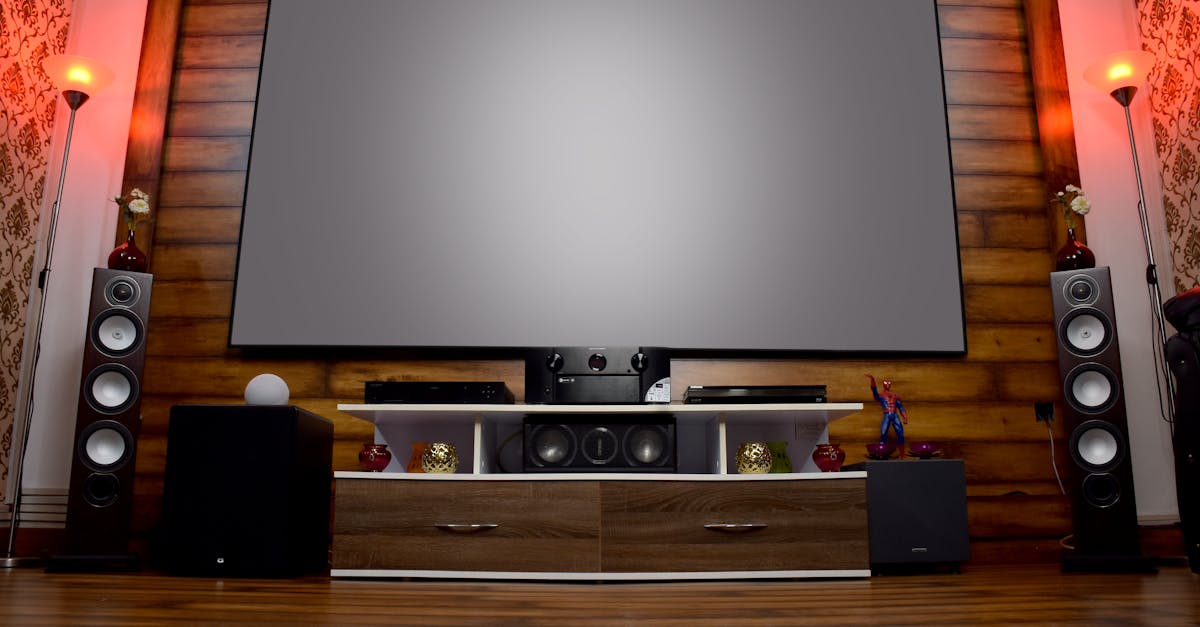
For those who truly want the best possible audio experience, who demand cinematic immersion, and who want to future-proof their setup, there’s no substitute for a dedicated multi-channel home theater system. This means an Audio-Video Receiver (AVR) paired with separate, purpose-built speakers, typically in a 5.1 or 7.1 configuration (e.g., front left, center, front right, two surrounds, and a subwoofer), often with additional height channels for Dolby Atmos or DTS:X. This is where sound truly comes alive.
The AVR is the brain of your audio system, handling all audio decoding (Dolby Atmos, DTS:X, etc.), amplification, and video switching. It provides the clean power necessary to drive real speakers effectively, something no TV can do. The speakers themselves are where the magic happens. Unlike a soundbar, which tries to pack everything into one enclosure, a multi-channel system uses discrete speakers, each optimized for its specific role. The center channel, for example, is specifically designed for dialogue, ensuring every word is crystal clear and anchored to the screen. The front left and right speakers create a wide soundstage for music and effects, while the surround speakers immerse you in ambient sounds and pinpoint effects, making it feel like sounds are coming from all around you. And then there’s the subwoofer – a dedicated beast for low-frequency effects that will quite literally shake your room during explosions and deep musical notes, adding a physical dimension to your audio that’s impossible with smaller setups.
The real power of this setup lies in its spatial accuracy and uncensored dynamic range. Sounds can be precisely placed in a 360-degree sound field, making a helicopter sound like it’s flying overhead or a bullet whizzing past your ear. The dedicated power from the AVR means there’s no compression; quiet sounds are truly quiet, and loud sounds are truly thunderous, allowing the content creator’s artistic intent to shine through. Yes, this requires more cables, more components, and more setup effort, but the payoff in terms of pure audio fidelity and immersive experience is unparalleled. In my opinion, if you’re spending thousands on a high-end TV, anything less than a decent AVR and speaker package is selling your visual experience short. It’s an investment that will last through multiple TV upgrades and deliver superior sound every single time.
The Overlooked Secret: Room Acoustics and Speaker Placement
Even with the best equipment, there’s one critical factor that often goes completely overlooked, yet can dramatically impact your sound quality: room acoustics. You can have a $10,000 sound system, but if your room is a giant echo chamber or your speakers are poorly placed, it will still sound subpar. This is a mistake I see both beginners and even experienced enthusiasts make, focusing solely on gear and neglecting the environment.
Every room has a unique sonic signature, characterized by reflections, absorption, and resonance. Hard, flat surfaces like bare walls, glass windows, and hardwood floors will reflect sound, creating echoes and muddiness. Soft, porous materials like carpets, curtains, and upholstered furniture will absorb sound, which can be good up to a point, but too much absorption can make a room sound dead. The goal is to find a balance.
Simple, actionable steps can make a huge difference:
- Speaker Placement: This is paramount. Don’t just plonk speakers wherever they fit. For a soundbar, ensure it’s not shoved into a cabinet, which will muffle its output. For a multi-channel system, follow basic guidelines: front speakers should be equidistant from your main listening position, and the center channel should be as close to the screen as possible. Surround speakers should be to the sides or slightly behind, angled towards the listener. Even small adjustments – moving a speaker a few inches, toeing it in slightly – can yield significant improvements.
- Soft Furnishings: Introduce more soft surfaces. Thick curtains on windows, a large area rug on a hard floor, upholstered sofas and chairs, and decorative pillows all help absorb sound reflections, leading to a clearer, more controlled sound. Even adding some bookshelves filled with books can act as diffusers.
- Wall Treatments: For more advanced users, consider acoustic panels. These don’t have to be unsightly studio foam; many companies make attractive fabric-wrapped panels that blend into home decor. Placing them at primary reflection points (e.g., on the side walls halfway between your speakers and listening position) can dramatically reduce echo and sharpen the soundstage. I’ve personally seen setups go from ‘good’ to ‘amazing’ just by addressing glaring acoustic issues with strategic panels.
Ignoring your room’s acoustics is like buying a high-performance car and only driving it on a dirt road. It will perform, but never to its full potential. Even small, inexpensive changes can unlock a new level of clarity and immersion from your existing audio gear, proving that sometimes, the biggest upgrade isn’t new hardware, but optimizing what you already have.
Conclusion: Stop Compromising Your Experience
Your new, gorgeous TV deserves equally gorgeous sound. The reality is that the quest for ever-thinner displays has come at a direct cost to audio fidelity, making built-in TV speakers largely inadequate for a truly immersive entertainment experience. The compromise isn’t just about sound quality; it’s about the emotional engagement with your content – the crisp dialogue, the impactful explosions, the enveloping scores that bring stories to life. In my experience, settling for subpar audio diminishes the value of your incredible picture.
Whether you opt for a sleek soundbar to declutter and simplify, or you dive headfirst into the expansive world of a multi-channel home theater system, the takeaway is clear: external audio is not an accessory, it’s an essential component of a complete home entertainment system. Take the time to explore your options, consider your room’s acoustics, and invest in sound that truly matches the visual spectacle of your TV. Your ears, and your overall enjoyment, will thank you for it. Don’t just see the movie; experience it.
Frequently Asked Questions
Q: Why are TV speakers so bad if TVs are so advanced now?
A: It’s a fundamental design tradeoff. Modern TVs prioritize ultra-thin aesthetics, leaving no physical space for the large drivers, ample enclosures, and intelligent placement required to produce rich, full-range sound. Physics dictates that small, poorly placed speakers will inherently produce thin, flat audio, regardless of video advancements.
Q: Is a soundbar really worth it, or is it just another gadget?
A: Absolutely worth it. A good soundbar offers significantly larger drivers and more internal volume than built-in TV speakers, leading to dramatically improved dialogue clarity, better dynamic range, and actual bass response. It also typically fires sound forward towards your listening position, reducing muddy reflections and creating a wider soundstage, making it the minimum impactful upgrade for any TV audio.
Q: What’s the difference between a soundbar and a full home theater system?
A: A soundbar is an all-in-one unit designed for simplicity and space-saving, offering a significant improvement over TV speakers but with some inherent compromises. A full home theater system uses a separate Audio-Video Receiver (AVR) and discrete speakers (e.g., 5.1 or 7.1 channels) that are purpose-built for specific frequency ranges and spatial effects. This offers superior immersion, dynamic range, and upgradability, but requires more components and setup.
Q: Can I improve my TV’s sound without buying new equipment?
A: To a limited extent, yes. Ensure your TV’s built-in speakers are not obstructed. Experiment with your TV’s audio settings (e.g., ‘Clear Voice’ mode, EQ adjustments if available), though these are often minimal. Small room acoustic improvements like adding rugs, curtains, or upholstered furniture can reduce reflections. However, these steps will only marginally improve the inherent limitations of the built-in speakers.
Q: How important is room acoustics for good sound?
A: Extremely important. Room acoustics can make or break even an expensive audio system. Hard surfaces create echoes and muddled sound, while soft surfaces absorb it. Optimal speaker placement, combined with strategic use of soft furnishings (curtains, rugs, sofas) and potentially acoustic panels, can dramatically enhance clarity, soundstage, and overall immersion, often for less cost than a hardware upgrade.
Written by Elias Vance
Hardware reviews, product teardowns, engineering insights
A former R&D engineer, Elias possesses an uncanny ability to dissect new hardware and explain its inner workings.
You Might Also Like

Why Your Car Stereo Has No Bass (And What Actually Works for Deep, Punchy Sound)
Struggling with weak car audio bass? Learn the hidden reasons your stereo lacks punch and discover real solutions for deep, impactful low end.
Why Your New Phone Charger Feels Slow (And What Actually Works for Real Speed)
Discover why your new phone charger might be underperforming and the concrete steps to achieve true fast charging, not just advertised speeds.

Why Your Car Stereo Sounds Muddy (And What Actually Works for Real Clarity)
Is your car audio lacking clarity? Elias Vance explains why factory systems often sound muddy and shares expert tips to achieve crisp, clear sound.